Sunday, 13 September 2020

 A Lament

By Percy Bysshe Shelley (1792-1822)

O world! O life! O time!
On whose last steps I climb,
Trembling at that where I had stood before;
When will return the glory of your prime?
No more—Oh, never more!

Out of the day and night
A joy has taken flight;
Fresh spring, and summer, and winter hoar,
Move my faint heart with grief, but with delight
No more—Oh, never more!

____________________________________________

winter hoar, short for hoarfrost before 900; Middle English hor,Old English hār; cognate with Old Norse hārr gray with age, Old Frisian hēr gray, Old High German hēr old (German hehr august, sublime); the first known use of hoarfrost came during the medieval period in England during the 13th or 14th century. It is not known who first used the term to describe a layer of frost, but at some point the term entered the lexicon of the English language. Its root is taken from the old English adjective "hoary" which means, gray or white in appearance. This word was often used to describe a person of age who had white hair and a white beard. Knowing this, it now makes sense how one would look at a frost-covered tree in that age and call the frost covering it hoarfrost. 

"I think myself, and have always thought, that 'A Lament' is the greatest thing in English poetry out of Shakespeare; the greatest thing in the entire poetry of the world out of Shakespeare, Dante, and Aeschylus. Nowhere else, save in some passages of these three poets, has the passionate experience of life (which is a different thing from the 'criticism' of it), been put into such perfectly faultless and flawless verse."  George Saintsbury 


Found this translation in Hans Hennecke, Gedichte von Shakespeare bis Ezra Pound. Einführungen, Urtexte und Übertragungen (Wiesbaden: Limes Verlag, 1955),  S.127.

Sunday, 8 September 2019


The Snob

Curse of the Commonwealth, leech, parasite!
Whose back none other labor knows than that
Of rubbing smooth the chairs wheron you sat.
The leopard shall not lose his spots-his load
Of hump the camel- nor his warts the toad,-
Nor grows the snob and flunky unexempt
From physic marks of feature,- and contempt
Of honourable men. The smirked grimace,
The high falsetto titter and the face
With in-drawn lip, the up-screwed eyes and nose,
The parrot stock of speech, -the strut, the pose,-
Such are the signs that Nature sets to mock
The rank decadence of her basest stock.
So, done at last! The scornful muse refrains,
Washes her hands defiled in water clear,
And wipes her sandal-soles upon your rear.
Away! Since even snobs must have their due,
She plants a kick upon your greater you.

Herman George Scheffauer

[from 'Of Both Worlds Poems by Herman Scheffauer' (A. M. Robertson, San Francisco, 1903), pp. 111-2.]

Wednesday, 24 July 2019

On Observing some names of little note recorded in the Biographia Britannica (September, 1780)

Oh, fond attempt to give a deathless lot

To names ignoble, born to be forgot!

In vain, recorded in historic page,

They court the notice of a future age:

Those twinkling tiny lustres of the land

Drop one by one from Fame's neglecting hand;

Lethæan gulfs receive them as they fall,


And dark oblivion soon absorbs them all........"

The Poems of William Cowper. Ed. By John S. Memes, LL.D. Third Edition. (London: Ball, Arnold, & Co. Paternoster Row. A. & C. Black, Edinbuzrgh. 1840), p.350'

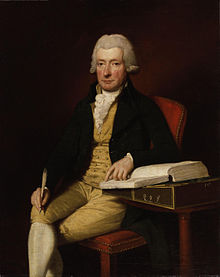
Image result for william cowper

Friday, 11 May 2018

https://thecharnelhouse.org/2017/09/25/georg-lukacs-philosopher-of-bolshevism/

This is a fascinating page, with access to many of his books! Highly recommended.

Sunday, 25 February 2018

America in the Oxford DNB | Oxford Dictionary of National Biography


I had anticipated finding something on the English-American poet Richard Realf (1832-1878), but alas, there's nowt there!  Wikipedia at least has an entry for him https://en.wikipedia.org/wiki/Richard_Realf although, even here, there is, as yet,  no mention of Lady Byron in England or anything on this former connection in England.
I'm still left reeling, gasping almost, after having read his poem for the first time:
"Written on the Night of His Suicide", I won't include  Hinton's comments to this, which are quite remarkable, together with some of the American Civil War poems that are similarly quite astonishing: "Apocalypse", for example, with its monorhyme scheme (a, a, a):

Straight to his heart the bullet crushed;

Down from his breast the red blood gushed,

And over his face a glory rushed.


A sudden spasm shook his frame,

And in his ears there went and came

A sound as of devouring flame


The first stanza of his poem "My Sword Song"[published in the
Chicago Tribune late in the fall of 1862] sounds so much like Kipling's similar use of 8 lines per stanza and the rhyming scheme (a, b, a, b, c, d, c, d)  

Day in, day out, through the long campaign, 
I march in my place in the ranks; 
And whether it shine or whether it rain, 
My good sword cheerily clanks; 
It clanks and clanks in a knightly way 
Like the ring of an armored heel; 
And this is the song which day by day, 
It sings with its lips of steel: 

Further, when one reads the actual background to such a poem in his friend Richard J. Hinton's 'Memoir'(1898) and discovers its provenance, the comparison with Byron (and the immortal  John Brown), which William McDevitt in 1918 so wished to emphasize for the inhabitants of San Francisco, becomes much clearer: 

"Realf was in the brigade commanded by General Lytle, serving as a non-commissioned officer. Both met as such when duty permitted, and became warm 
friends. During the forward movement which closed 
for the time in the occupancy of Chattanooga and the 
great battle of Chickamauga, General Lytle made a 
speech at Bridgport, Alabama. " Vates " illustrates its 
effect on Realf , and expresses also the admiration he 
felt. The MS. of the sonnet was in the General's vest 
pocket, and was penetrated by the bullet that killed 
him during the early morning hours of September 20, 
1863, when directly in front of the regiment of which 
Realf was sergeant-major. It was the second day of 
the Chickamauga fighting. The sonnet and a MS. copy 
of "My Sword Song," were soaked red with Lytle's 
blood." (POEMS BY RICHARD REALF POET, SOLDIER, WORKMAN WITH A MEMOIR BY 
RICHARD J. HINTON  (New York & London: FUNK & WAGNALLS COMPANY,1898), p.cix.

The poet Richard Realf, born in Framfield, East Sussex 14 June 1832, didn't travel to the United States until 1854,  really does deserve a place in the ODNB. That Ambrose Bierce cited from Realf's poems in his letter to the young Herman George Scheffauer in 1895 [quote] must surely have something to do with his seeing something similar in their poetical approach, i.e. "speech that rushed up hotly from the heart"?
Astonishing too, if one considers that both Realf and Bierce were at the Battle of Chickamauga (September 18 – 20, 1863). Why was Bierce doing this?

Added Friday 10 April 2020

Chickamauga by Ambrose Bierce (14:39 minutes) Audiobook,  spoken text of story


https://www.youtube.com/watch?v=3a8fvofP-ps


Saturday, 13 January 2018

PROFESSOR HAECKEL'S RELIGION. » 22 Dec 1894 » The Spectator Archive

PROFESSOR HAECKEL'S RELIGION. » 22 Dec 1894 » The Spectator Archive: pROFESSOR HAECKEL has no more notion of the atti- tude of doubt than the most confident monk of the Middle Ages. He is a dogmatist of the purest water; but a dogma- tist who affirms almost all that the religious world denies, and denies almost all that it affirms. His address on